





























The lungs of Delhi men are in dire straits! Men's lungs inhale more polluted air than women's.
The reason for this is more traffic fumes in the evening and weather conditions that keep pollution close to the ground. The study also claimed that the accumulation of particulate matter in the lungs on the night of Diwali almost doubles compared to the days before the festival and this increased level persists for several days.
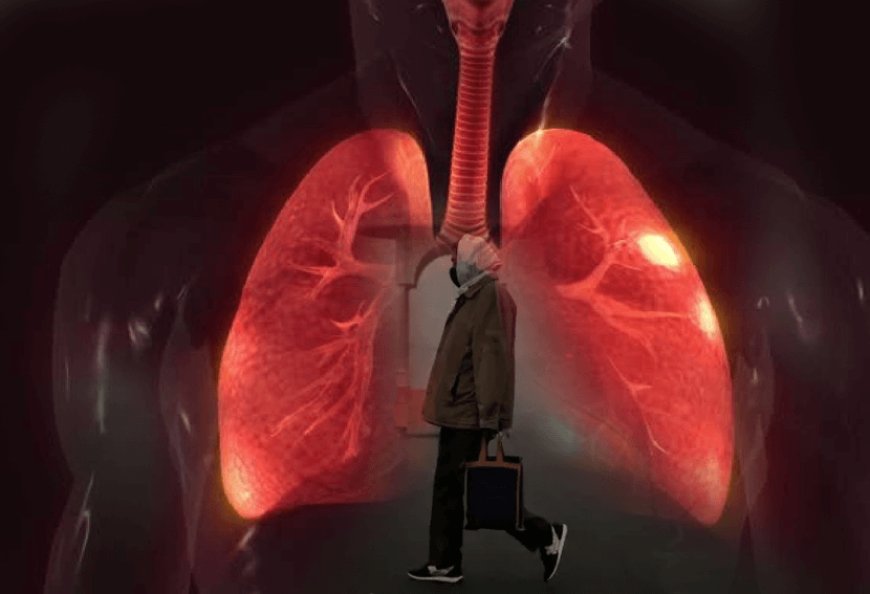
Driving in traffic or walking on congested roads, Delhi's men are sucking the city's dirty air into their lungs more than women. Scientists from Delhi's Netaji Subhas University of Technology and an environmental consultancy in Noida have made this startling finding in a five-year study from 2019 to 2023. The study is titled 'Five-year assessment of inhaled particulate matter in Delhi: Risks and health hazards'. The researchers analysed data from 39 air quality monitoring stations in Delhi. According to the scientists, men's breathing volume and airflow are higher than women's, so more toxic particles are accumulating in their lungs. While sitting, PM 2.5 particles in the lungs of men are about 1.4 times and PM10 particles are 1.34 times more than women. Both types of particles (PM 2.5 and PM10) in men are reaching the lungs about 1.2 times more than women while walking. The research used an internationally validated model, which showed how much of the airborne pollution is actually reaching and accumulating in different parts of the lungs.
According to the study, the concentration of fine particulate matter (PM 2.5) in the lungs of people in Delhi is about 10 times higher than India's air quality standard and about 40 times higher than the World Health Organization (WHO) guideline. According to India's standards, the daily limit of PM 2.5 is 60 micrograms per cubic metre and PM10 is 100 micrograms per cubic metre. As per WHO standards, it is 15 micrograms per cubic metre for PM 2.5 and 45 micrograms per cubic metre for PM10. The level of air pollution in Delhi is much higher than the national average. It was found in the research that particles are being deposited in the lungs 2 to 3 times more than sitting while walking. Men walking on foot are most at risk, followed by women walking on foot, then men sitting and women sitting the least. It is clear that workers who spend a lot of time outdoors, such as pedestrians and street vendors, are most at risk. The most dangerous of these are fine particles like PM 2.5, which reach the deepest parts of the lungs. During the evening traffic hours, 39 per cent more PM 2.5 particles and 23 per cent more PM10 particles are accumulating in the lungs than in the morning. The reason for this is more traffic fumes in the evening and weather conditions that keep pollution close to the ground. The study also claimed that the accumulation of particulate matter in the lungs on the night of Diwali almost doubles compared to the days before the festival and this increased level persists for several days.
What's Your Reaction?