



























The 6 most dangerous periods of inflation since independence, when the common man was devastated.
If we talk about the impact, then 1973-74 and 1991 are counted among the most serious inflationary crises in India's economic history. But the kitchen of the common man was most affected by the onion crisis of 1998 and the persistent high inflation of 2009-13. At the same time, the Corona period showed that the impact of the global crisis reaches directly to the pocket of every Indian.
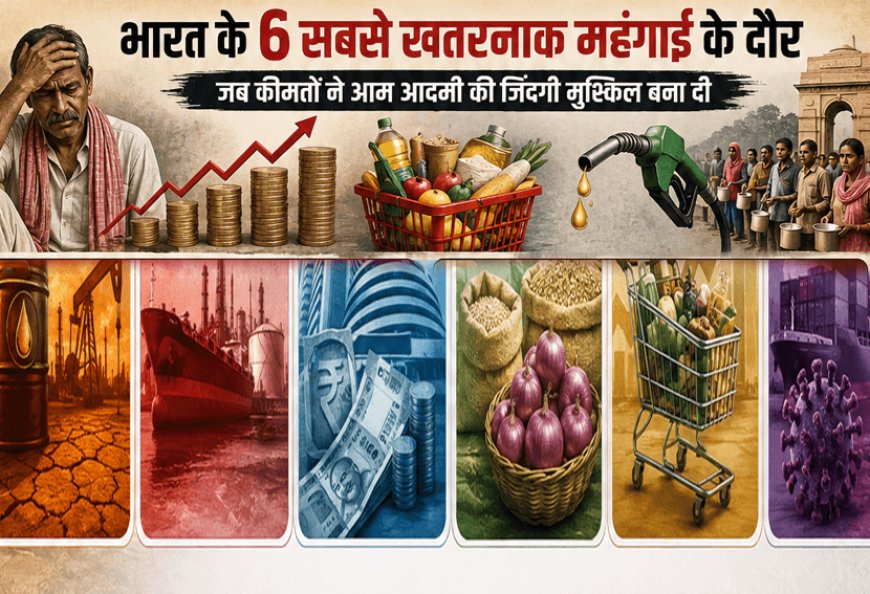
Inflation in India has reached 3.48 per cent in 2026 and is expected to rise further in the coming months. But the country has seen many such periods before, when inflation completely shook the lives of the people. Somewhere the oil crisis lit a fire, somewhere the drought emptied the kitchen, somewhere the onion fell to the government.
1973-74: Oil crisis and inflation of more than 25%
After the oil embargo of Arab countries in 1973, crude oil prices increased up to four times. At that time, India was heavily dependent on imports. The continuous drought from above destroyed the food production.
WPI inflation reaches 25.2% Prices of wheat, sugar and edible oil become uncontrollable Foreign exchange reserves come under severe pressure Budget of 1973 was called "Black Budget" 2. 1979-80: The Iranian Revolution and the Second Oil Shock
Iran's Islamic Revolution and the subsequent Iran-Iraq War affected global oil supplies. The fear in the market increased so much that the price of oil more than doubled.
Inflation reached 11.35 per cent in 1980. Drought in many states worsened the situation and the government had to devise a strategy to reduce dependence on oil. When India was on the verge of bankruptcy
In 1991, India's foreign exchange reserves were left with just three weeks worth of imports. The Gulf War, political instability and the trade crisis shook the economy.
Inflation reached about 13.6 percent India had to take a loan from the IMF 47 tons of gold had to be mortgaged From this crisis, the economic reforms of 1991 (LPG Reforms) started 4. 1998-2000: Onion changed politics.
The onion crop was damaged and the prices skyrocketed. The kitchen budget of people in many cities, including Delhi, has deteriorated.
Inflation reached 19.7 per cent in November 1998 Onion prices became an election issue BJP government in Delhi faced defeat 5. 2009-2013: Continuous double digit inflation
After the global recession, spending increased around the world and commodity prices jumped. The poor monsoon and floods in India exacerbated the food crisis.
Retail Inflation Rises to 10.79% in January 2013 Food Inflation Rises to 13.36% Petrol, Pulses, Vegetables and Gas All Become Costlier Public Anger Grows and Strengthens Anna Movement 6. 2020-2022: Corona and the impact of the Russo-Ukrainian War
The Corona lockdown has disrupted the supply chain. The subsequent Russo-Ukrainian war set fire to edible oil and fuel prices.
CPI Inflation Rises to 6.6% in 2020 WPI Inflation Rises to Record High of 1 6.6 3% in May 2022 Petrol, Diesel and Food Prices Rise
If we talk about the impact, then 1973-74 and 1991 are counted among the most serious inflationary crises in India's economic history.
But the kitchen of the common man was most affected by the onion crisis of 1998 and the persistent high inflation of 2009-13. At the same time, the Corona period showed that the impact of the global crisis reaches directly to the pocket of every Indian.
What's Your Reaction?