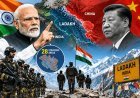
































India's response to China's objection to Ladakh Names of 28 strategic areas decided, Beijing's claims will not change the ground reality
Chinese Foreign Ministry spokesperson Mao Ning opposed India's decision during a press conference in Beijing on Tuesday. Reiterating China's old stand on the so-called Union Territory of Ladakh, he said the names announced by India are illegal and invalid. He also claimed that the relevant areas in the western sector of the India-China border have always belonged to China. China's claims do not change India's position. At the heart of China's objection is India's decision to officially demarcate 28 locations and geographical areas in Ladakh. India had decided the names of these places on October 2. These include sensitive border areas like Gogra and Hot Springs located close to the Line of Actual Control (LAC).
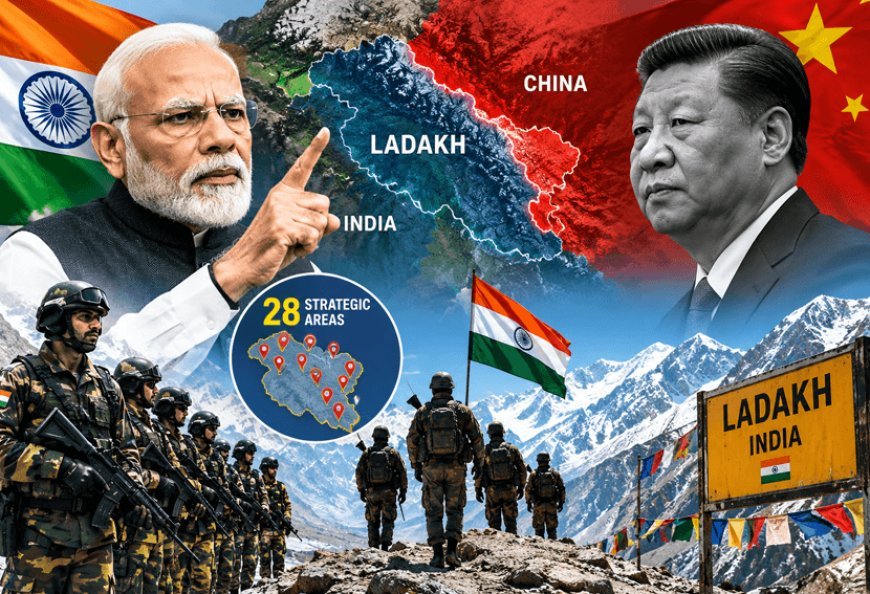
New Delhi: China has once again objected to India's decision to identify and officially name the strategic areas of Ladakh. With India naming 28 strategic locations and areas with geographical features in Ladakh, Beijing has reiterated its claim over these areas. However, amid China's opposition, India's move is seen as crucial towards strengthening the official identification, mapping and administrative arrangements of the border areas.
Chinese Foreign Ministry spokesperson Mao Ning opposed India's decision during a press conference in Beijing on Tuesday. Reiterating China's old stand on the so-called Union Territory of Ladakh, he said the names announced by India are illegal and invalid. He also claimed that the relevant areas in the western sector of the India-China border have always belonged to China.
China's claims do not change India's position.
At the heart of China's objection is India's decision to officially demarcate 28 locations and geographical areas in Ladakh. India had decided the names of these places on October 2. These include sensitive border areas like Gogra and Hot Springs located close to the Line of Actual Control (LAC).
India's move is aimed at ensuring accurate identification of border areas, systematising official mapping and raising awareness about these areas. In such a situation, China's objection brings to the fore the ongoing differences between the two countries over the border.
Significantly, the mere assertion of a territory by China does not automatically change India's administrative stance or official mapping. The resolution of the border dispute between the two countries is a complex diplomatic and military matter, which is determined not by unilateral statements, but by related processes and negotiations.
Why are Gogra and Hot Springs important?
Gogra and Hot Springs are strategically important areas in eastern Ladakh. These places were also among the friction areas during the tension between the troops of India and China in 2020. They play an important role in the patrolling and border surveillance of Indian troops along the Line of Actual Control.
The military standoff in eastern Ladakh came to a head after clashes between Indian and Chinese troops in the Pangong lake area on May 5, 2020. Several rounds of military and diplomatic talks have taken place between the two sides. In 2022, the process of disengagement of troops in some areas progressed, although the border dispute remained an important issue in the relations of the two countries.
These 28 places have been given official recognition
The places identified by India include Alisha Giri mountain peak, Brangsa, Chapchingal pass, Kanishka peak, Karun Pir mountain, Kuksel, Martand Giri, Parpic glacier, Skamri glacier, Shachmirik pass, Shakorga valley, Zorawar peak, Dehra Compass and Drak Karpo.
The list also includes names like Jalmori, Kumarayan Point, Panglung, Rinchen Zangpo, Sakyashree Giri, Guru Rinpoche, Shamal Lungpa, Yangpa River, Marpa Lotsawa Ri, Milarepa Kangri, Shiva Ri and Maheshwar Ri.
Among these, Shamal Lungpa finds special mention as the route was used for patrolling and troop movement in the 1950s.
India's priority on the border is clear.
India's move to name the strategic areas in Ladakh comes at a time when stability along the Line of Actual Control and confidence-building between the two countries remain key issues. China has contested the decision, reiterating its territorial claims, while India has clarified the official identity of these areas through its administrative and cartographic decision.
The two countries have different claims on the border dispute. In such a situation, instead of considering China's objection as a step to change India's decision, it would be more appropriate to see it in the context of the ongoing territorial differences between the two countries. The identification of 28 locations in Ladakh underlines that the official record of the border areas and their accurate identification are part of India's administrative and strategic priorities.
What's Your Reaction?