











No public place can be reserved for indefinite agitation: Supreme Court on balance between right to protest and public order
The court's observation brings to the fore the larger question of the balance between democratic rights and the requirements of public life. On the one hand, citizens and organisations have the constitutional right to express their dissent and protest peacefully, and on the other hand, indefinite blockade of public places, markets and transport may affect the freedom and livelihood of ordinary citizens. Senior advocate Mukul Rohatgi, appearing for the traders, told the court that around 50 lakh people live in the vicinity of the protest site. According to him, shops are closed due to the protest and normal activities have also been affected in a major commercial area like Connaught Place (CP).
The matter reached the Supreme Court as the ongoing protests at Ramlila Maidan during the festival season affected business activities. It sought a response from the Centre on the plea of the traders, directing it to make the protesters also parties.
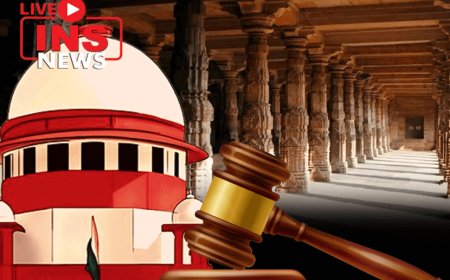
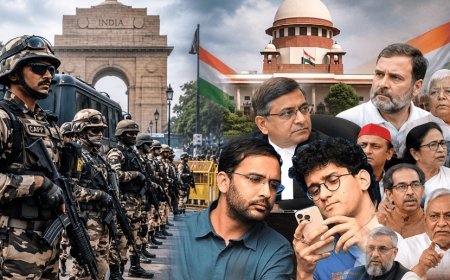
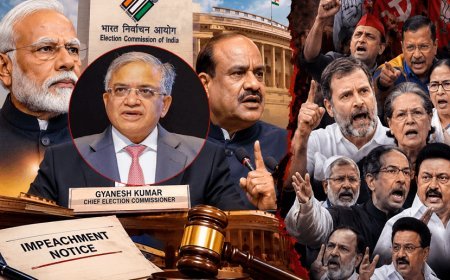
New Delhi. The Supreme Court on Tuesday made a significant observation on the balance between the right to protest in public places and the everyday life of ordinary citizens. During the hearing of a plea alleging that the ongoing protests against the Chief Election Commissioner (CEC) have affected business activities, the top court made it clear that no public place can be occupied indefinitely.
A bench of Chief Justice Surya Kant, Justice Joymalya Bagchi and Justice V. Mohana was hearing a batch of petitions filed by trade unions. These include the petition of 'Kirana Committee Delhi'. The petitioners said that due to the ongoing protests at Ramlila Maidan, nearby markets and business establishments are suffering huge losses. They argue that the traders as well as the common people are suffering due to the business being affected during the crucial time of festivals.
During the hearing, the Chief Justice, while acknowledging the right to protest, stressed the need to demarcate time and place for it. "You can't occupy a place forever. Where will farmers, journalists, etc. go? Everyone has a right to protest. There should be a fixed time and a fixed period for the protest. "
The court's observation brings to the fore the larger question of the balance between democratic rights and the requirements of public life. On the one hand, citizens and organisations have the constitutional right to express their dissent and protest peacefully, and on the other hand, indefinite blockade of public places, markets and transport may affect the freedom and livelihood of ordinary citizens.
Senior advocate Mukul Rohatgi, appearing for the traders, told the court that around 50 lakh people live in the vicinity of the protest site. According to him, shops are closed due to the protest and normal activities have also been affected in a major commercial area like Connaught Place (CP).
However, the bench, instead of passing any final order in the matter immediately, gave an important direction to the petitioners. The court said the organisations and groups organising the protest should also be made parties to the petition so that no unilateral decision is taken without hearing their side. The bench made it clear that it would not be possible to decide on these issues till all the concerned parties are included.
The petitions cover not just the issue of business losses, but also serious allegations such as large-scale detentions, police action, closure of metro stations and suspension of internet services.
Earlier on October 15, the same bench had sought response from the Election Commission and other parties on the plea filed by Congress leader Rahul Gandhi and 12 other opposition leaders. The petition had alleged large-scale deletion of names from electoral rolls and alleged irregularities in the Special Intensive Revision (SIR) process.
Currently the hearing on the case is underway. The Supreme Court's observations have once again raised the important question of how wide the right to protest can be in a democracy and how to ensure that the interests of life, trade, movement and public order of ordinary citizens are protected while defining its limits.
What's Your Reaction?