














Yogi targeted by 'Chhote Miyan-Bade Miyan', accused of love for infiltrators; Question: Is there a growing political bitterness in the language of the Chief Minister?
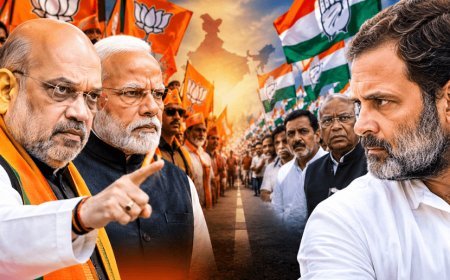
Yogi alleged that the previous Congress and Samajwadi Party governments ignored the development of Ayodhya. He also accused the opposition of obstructing development works. However, the political temperature of the speech rose further when the Chief Minister went beyond the achievements of development and targeted the opposition leaders by linking them with infiltrators. Why did the 'Chhote Miyan-Bade Miyan' comment raise questions? The Chief Minister said that at present there are two miyas in the country - one is Chhote Miyan and other is Bade Miyan. He alleged that both of them have great love for Bangladeshi infiltrators. Though he did not name Rahul Gandhi and Akhilesh Yadav, his political reference was seen as an attack on the leadership of the Congress and the Samajwadi Party.
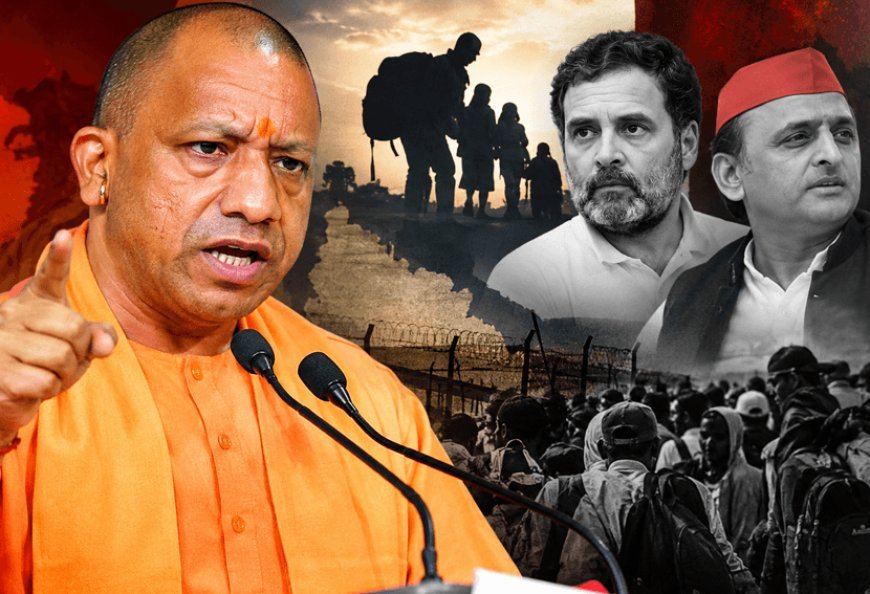
Yogi Adityanath attacks Rahul Gandhi, Akhilesh Yadav in Kanpur
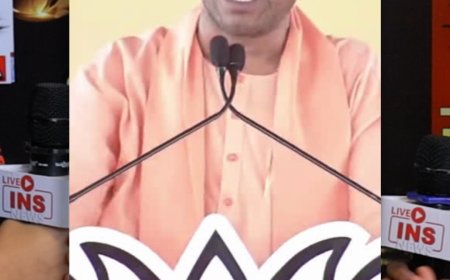
Kanpur. Uttar Pradesh Chief Minister Yogi Adityanath launched a scathing attack on the Congress and the Samajwadi Party at an event organised on the occasion of Maharishi Valmiki Jayanti in Kanpur. Without naming Rahul Gandhi and Akhilesh Yadav, he targeted the two by calling them "chhote miyan" and "bade miyan." The Chief Minister alleged that both the leaders have love for Bangladeshi infiltrators while they insult Dalits, downtrodden, poor, farmers and youth. His statement has once again taken the political debate beyond the issues of development, social justice and infiltration to the political use of language and religious identity of leaders.
The question is, when the chief minister of a state attacks the opposition from a public platform, should his language be limited to political protest or should it also have space for allegations and insinuations that could further sharpen the debate on the political and religious divide that already exists in society?
Strong attack on the opposition from the platform of development
After offering prayers at Valmiki Ashram on Maharishi Valmiki Jayanti at Bithoor in Kanpur, the Chief Minister inaugurated development projects worth Rs 411 crore at Nana Rao Peshwa Park. In his address, he mentioned the development of Ayodhya, Kashi, Mathura-Vrindavan and other religious places of the state. He said under the leadership of Prime Minister Narendra Modi, the character of Kashi Vishwanath Dham and Ayodhya has changed and his government is working for the development of religious and cultural places.
Yogi alleged that the previous Congress and Samajwadi Party governments ignored the development of Ayodhya. He also accused the opposition of obstructing development works. However, the political temperature of the speech rose further when the Chief Minister went beyond the achievements of development and targeted the opposition leaders by linking them with infiltrators.
Why did the 'Chhote Miyan-Bade Miyan' comment raise questions?
The Chief Minister said that at present there are two miyas in the country - one is Chhote Miyan and other is Bade Miyan. He alleged that both of them have great love for Bangladeshi infiltrators. Though he did not name Rahul Gandhi and Akhilesh Yadav, his political reference was seen as an attack on the leadership of the Congress and the Samajwadi Party.
The question here is not just why the chief minister attacked the opposition. In a democracy, it is natural to have heated political debates between the ruling party and the opposition. The real question is whether such allegations are being put forward with concrete facts and evidence, or are broad and emotive terms being used to build the image of political opponents?
The issue of infiltration is related to national security and law and order. The government has every right to take action on this and question the opposition. But accusing a political party of supporting infiltrators and proving that allegation with evidence are two different things. There is no independent confirmation of the allegations made in the Chief Minister's speech on the basis of this statement.
Are references to religion and identity necessary in every political debate?
In his speech, Yogi Adityanath also made serious allegations against the Congress and Samajwadi Party rule over riots, law and order, farmers' problems, unemployment and women's safety. He referred to incidents in Kosi Kalan, Jawahar Bagh and Muzaffarnagar to corner the previous governments. Targeting Akhilesh Yadav, he said power can be inherited, but efforts have to be made to gain wisdom.
But an important aspect of this entire speech is also the direction in which the political discourse moves on a platform like the inauguration of development projects. It is also necessary to ask questions to the government on issues like employment, farmers' income, women's safety, education, health and infrastructure, and also to count the government's own achievements. In such a situation, if the focus of the debate is policies and their results, then it is easy for the public to evaluate both the government and the opposition.
When the words' Miyan ', infiltrators and identity become prominent in political discourse, it is natural to question whether the debate is deviating from the real policy issues. However, on the basis of a single speech, it would not be appropriate to conclude that the Chief Minister uses similar language on every issue. But the words used in this speech and the allegations made must be investigated.
Social respect and political messages on Valmiki Jayanti
The Chief Minister greeted the people of the state on Maharishi Valmiki Jayanti and described the public holiday as a mark of respect to Maharishi Valmiki. He also mentioned about the plan to develop, protect and beautify the sites associated with Babasaheb Bhimrao Ambedkar, Sant Ravidas and Maharishi Valmiki. According to him, works related to boundary wall, chajan or canopy and other facilities are to be started at 4,000 such sites in the state.
These declarations relate to social honour, religious heritage and public amenities. On such an occasion, it is equally important to discuss the schemes of the government, their budgets, timelines and the impact on the ground.
Is it not the right of the Opposition to question the language of the Chief Minister?
Yogi Adityanath's attack on the Congress and the Samajwadi Party was politically sharp. Questioning the rule of opposition parties, criticising their policies and demanding answers on serious issues like infiltration are part of democratic politics. But the chief minister's post is not just a platform for political rivalry, but also a responsibility to represent the entire state.
So the question is not why Yogi Adityanath criticises the opposition. The question is what is the basis of the criticism, how strong is the evidence in support of the allegations and whether the language inspires the public to think over the policies or widens the gap between the political camps.
In a democracy, as much as it is important to seek answers from Rahul Gandhi, Akhilesh Yadav and other opposition leaders, it is equally important to examine the language and claims of the leaders in power. The chief minister's speech should also be judged on this criterion - does it answer the questions of the public, or does the political confrontation remain the biggest message?
What's Your Reaction?