












Now will the hero's religion also decide the box office? Rajkumar Santoshi rubbishes Shabana Azmis theory on "BATWARA 1947"
And that's probably the point Santoshi is most vocal about. According to him, the purpose of the film is not to target any religion, but to show that when humanity starts lagging behind in the name of religion and national identity, the common man suffers the most. Do the audience see the star or the character?
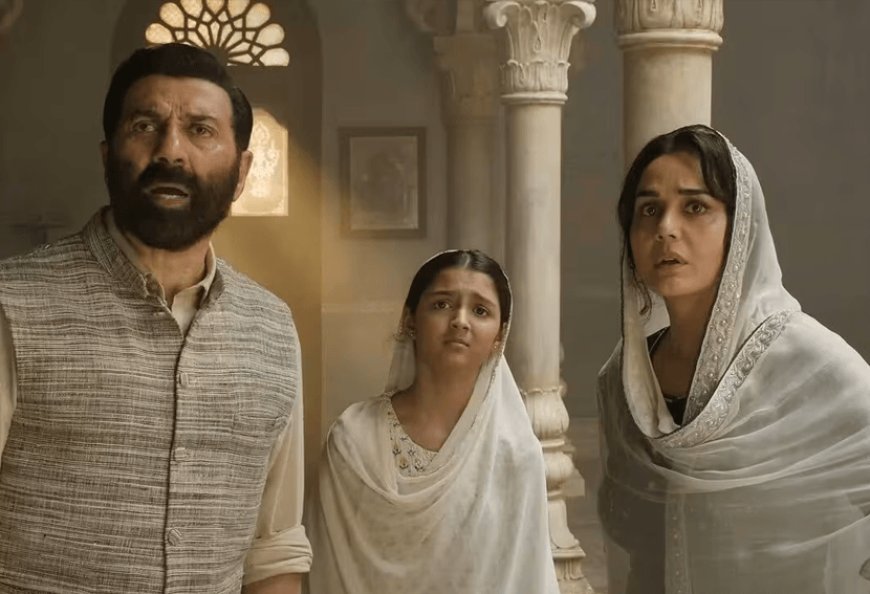
Why did the audience find it difficult to see Sunny Deol in a Muslim character? Was the story of the film weak or did the image of the star in the minds of the audience overpower the story? The poor box office performance of 'Partition 1947' has now raised a bigger question than cinema.
Rajkumar Santoshi's film 'Bantwara 1947' is not in the discussion these days only because of its box office performance. There is now a debate about the film, which directly reaches the thinking of the audience, the image of the artists and the growing religious distance in society. In the film, Sunny Deol plays the role of an Indian Muslim man named Sikandar Mirza, whose life turns upside down amid the tragedy of India-Pakistan partition. The film received mixed reviews from the audience and did not perform as well as expected at the box office.
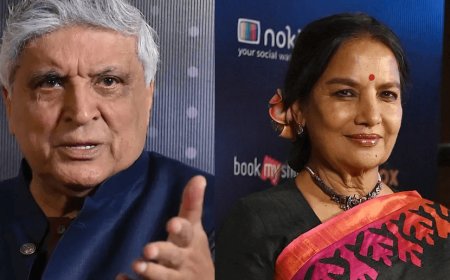
Meanwhile, veteran actress Shabana Azmi said one thing about the weak performance of the film, which gave a new twist to the whole debate. He believed that perhaps the audience could not accept Sunny Deol in the role of a Muslim. Shabana also considered Sunny Deol's long-standing action and patriotic hero image as a possible reason for this.
Shabana Azmi raises questions
Shabana Azmi said she was surprised that many people who watched the film appreciated its story and message, but a large number of viewers did not reach the theatre. According to him, perhaps the audience had trouble seeing Sunny Deol in a Muslim character.
He also gave the example of Amitabh Bachchan's old characters for this. Shabana recalled that Amitabh Bachchan played a Muslim character in 'Coolie' and the use of 786 in 'Deewaar' was also readily accepted by the audience. In such a situation, his question was why the same spontaneity is not seen today.
The matter did not end here. He also said that he got to hear about audiences who mistook Sunny Deol's character for a Pakistani, while his character in the film is not a Pakistani but an Indian Muslim.
That's what makes this whole controversy even more serious. If the audience identifies an actor's character on the basis of his old image even before watching the film, is it becoming difficult to convey a new thought to the audience through cinema?
Now Rajkumar Santoshi has given a direct challenge.
The director of the film Rajkumar Santoshi does not agree with this theory of Shabana Azmi. He categorically rejected the idea that an actor playing a character from another religion could be the reason for the film's failure. Santoshi argues that an actor should not be seen tied to his real life or the religion of his old film characters.
Actually, it was a risk from the beginning for Santoshi to cast Sunny Deol in a Muslim character. He had earlier told that when the film was conceived about 15 years ago, there was still a question in the industry about how an actor like Sunny Deol would be acceptable to the audience in the role of a Muslim hero.
But Santoshi considered this perceived risk as the strength of the film. He believed that the message of the film could be conveyed in a more effective way only through the popular and strong image of Sunny Deol.
Sunny Deol's character was a Muslim, not a Pakistani
Here also comes the most important confusion related to the film. Sikandar Mirza is not a Pakistani character. He is an Indian Muslim who tries to save his humanity and relationships amid the turmoil of Partition.
That is, the basic question of the film is not India versus Pakistan, but human versus bigotry.
And that's probably the point Santoshi is most vocal about. According to him, the purpose of the film is not to target any religion, but to show that when humanity starts lagging behind in the name of religion and national identity, the common man suffers the most.
Do the audience see the star or the character?
The 'Partition 1947' controversy is now throwing up an interesting question.
When an actor is known for a certain kind of roles for decades, does the audience accept him in a completely different role?
Sunny Deol's screen image has long been associated with patriotism, action and anti-Pakistan characters. So when the same actor plays an Indian Muslim man on screen, does the audience unknowingly mix up his old characters with the new one?
If that's the case, the problem isn't just one film.
The question that confronts Indian cinema is whether an actor will be accepted only on the basis of his past image or his performance will be judged on the basis of character.
And this is where the debate moves from cinema to society
Rajkumar Santoshi has also expressed concern about the decreasing tolerance and inclusivity in society in this whole matter. His question is basically, what is the problem if an actor plays a person of another religion?
Does a Hindu actor have to be a Muslim to play a Muslim character?
Does a Muslim actor have to be a Hindu to play a Hindu character?
If the answer is' no ', then the question should be how the character was played, not what religion the actor comes from.
That's the biggest strength of cinema. An actor through his body, voice and acting can live a life which is completely different from his own life.
What is the real reason behind the film's failure?
To say that the film's lacklustre box office performance was only because of Sunny Deol's Muslim character would probably be too simplistic a conclusion.
The release of a film, the competition, the presentation of the story, the screenplay, the choice of the audience, the promotions and the current box office environment are some of the factors that affect the performance of a film. Reviews were not entirely unanimous on 'Partition 1947' either.
So it's possible that Sunny Deol's star image may have affected the perception of some viewers, but it's too early to attribute it as the sole reason for the film's failure.
The Biggest Question: Have we even started dividing characters into religions?
The controversy over 'Partition 1947' is perhaps more important than the box office figures because it makes us think about ourselves.
Do we see the actor playing the character or his religion?
Do we see the Muslim character of Sunny Deol as Sikandar Mirza or do we see the same old Sunny Deol?
And if it becomes difficult to accept an actor as a person of another religion on screen, then the question is not only of Bollywood - it is also of our own social thinking.
Films have always been a mirror of society. But perhaps this time 'Partition 1947' has put the mirror in front of us.
Now it is to be seen whether the audience sees in it the failure of the film... or a picture of the changing thinking within themselves.
What's Your Reaction?