





















What will be the air quality of Delhi in the next 15 years? Pollution can't be completely eliminated by 2040: Experts
How clean is Delhi's air by 2040? According to the report by the United Nations Environment Programme (UNEP) and the Climate and Clean Air Coalition, if India effectively implements the national air quality standards set from 2026, a reduction of dangerous PM 2.5 pollution levels in Delhi by about 2040 is possible. However, in case of delay in implementation of policies, the improvement could be limited to around 10 per cent. This means that it will not be enough just to make plans, but it will also be necessary to follow them in a timely and consistent manner.
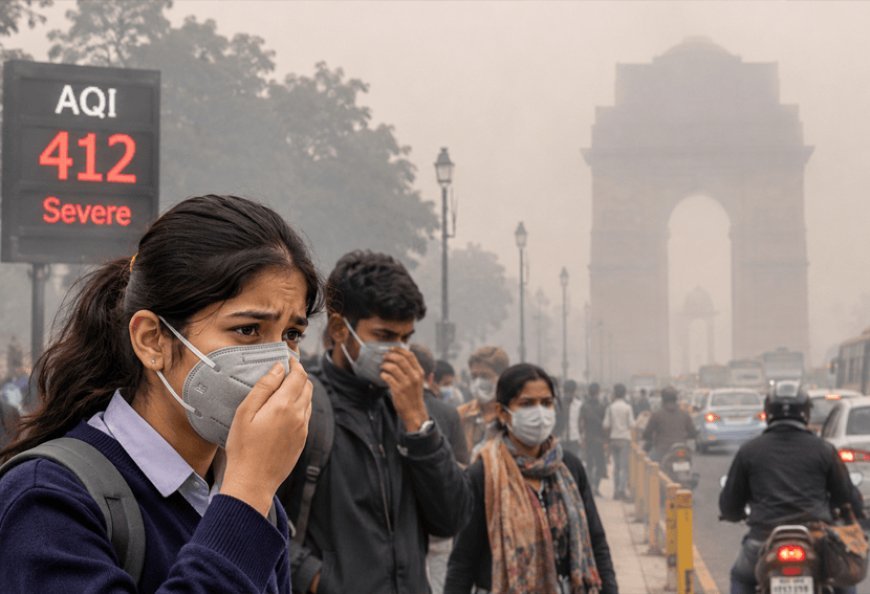
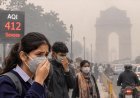
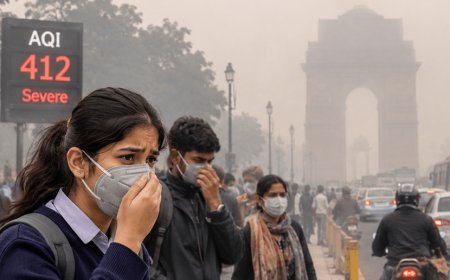
New Delhi: The problem of air pollution facing the country's capital Delhi is no longer just a seasonal challenge of winter, but has become a serious environmental and public health crisis for years to come. The biggest question before the people of Delhi-NCR, who are forced to live amid toxic air, smog and increasing pollution between November and January every year, is whether the capital will get clean air in the coming 15 to 20 years or pollution will continue to affect the people's breath.
According to the Central Pollution Control Board (CPCB) data on November 11, 2026, Delhi's average air quality index (AQI) was recorded at 303, which falls in the very poor category. This is the situation when schemes worth crores of rupees, restrictions of Graded Response Action Plan (GRAP) and judicial interventions to control pollution continue unabated. Despite this, a permanent solution to pollution has not yet been found.
How clean is Delhi's air by 2040?
According to the report by the United Nations Environment Programme (UNEP) and the Climate and Clean Air Coalition, if India effectively implements the national air quality standards set from 2026, a reduction of dangerous PM 2.5 pollution levels in Delhi by about 2040 is possible.
However, in case of delay in implementation of policies, the improvement could be limited to around 10 per cent. This means that it will not be enough just to make plans, but it will also be necessary to follow them in a timely and consistent manner.
According to a study by Urban Emissions, to bring the annual average level of PM 2.5 in Delhi to the national standard i.e. 40 micrograms per cubic meter, steps will have to be taken continuously and at a strict regional level for the next 10 to 15 years from the year 2026. That is, the process of improvement in Delhi's air will be long and its results cannot be expected to be visible immediately.
Figures for the last 10 years: Signs of improvement, but risks remain
On the pollution front, some figures certainly raise hopes of relief. According to the Union Environment Ministry's data till October 2026, the number of good to moderate category days in Delhi rose to 220 between January and October, compared to 200 in the same period last year.
Similarly, the average AQI of Delhi in October 2026 was recorded at 166, which is said to be the lowest October level in the last eight years.
But it is too early to accept these figures as a solution to the pollution problem. According to a report by the Energy Policy Institute of the University of Chicago, the current air pollution levels in Delhi are reducing the average life expectancy of people living here by about 8.2 years.
This data shows that pollution is not just limited to eye irritation, coughing or shortness of breath, but it is also having an impact on people's long-term health and life expectancy.
What is the government's preparation from 2030 to 2047?
Several schemes are being worked out by the Centre and the Delhi government for long-term improvement in Delhi's air quality.
The CPCB and the Commission for Air Quality Management (CAQM) have launched a new scientific study in collaboration with four premier institutes. Under this, sources of pollution will be identified on a grid of 500 × 500 meters. Based on this study, a roadmap for pollution control will be prepared for the years 2030, 2035 and 2040.
In addition, the Delhi government has approved a seven-year 'Clean Air Healthy Delhi' project worth Rs 8,300 crore in collaboration with the World Bank. Proposed from 2026 to 2033, the project will focus on key areas such as transportation, construction and road dust and waste management.
Under the Master Plan for Delhi-2047, emphasis has been laid on strengthening public transport and expanding green areas in the city. The real impact of these schemes will depend on the seriousness and consistency with which they are implemented.
Why is Delhi's pollution not coming down?
According to environmental experts, there is no single cause for the pollution problem in Delhi. This is due to a combination of factors such as vehicular emissions, industrial emissions, construction dust, road dust, garbage burning and stubble burning in nearby states.
Apart from this, the geographical location of Delhi and the winter weather also make pollution severe. During winter, due to low wind speed and atmospheric conditions, pollutants start accumulating near the ground. As a result, toxic air remains in the atmosphere for a long time.
Experts believe that a permanent solution to this problem is not possible by taking steps only within the borders of Delhi. A common and effective pollution control strategy will have to be adopted in the entire Indo-Gangetic region comprising Punjab, Haryana, Uttar Pradesh, Rajasthan and Delhi.
Reduction in vehicular emissions, use of cleaner fuels, expansion of public transport, control of industrial pollution and prevention of dust from construction works have to be made priorities throughout the year.
Delhi in the next 15 years. Are you expecting more or more?
How clean Delhi's air will be in the coming 15 years will not be answered only by government schemes or scientific projections. It will depend on how effective action is taken on the sources of pollution and how responsibly shared efforts are made by Delhi as well as the surrounding states.
The projected reduction in PM 2.5 levels by 10 to 20 per cent by 2040 is an indication of improvement, but it does not mean that Delhi will be completely free of pollution.
The real challenge is not to reduce pollution levels by a few per cent, but to keep the air in line with the prescribed safe standards. If concrete steps are not taken at the regional level, Delhi may face toxic air and smog in winter in 2030, 2040 and even 2047.
The next 15 years of Delhi will be very important in this regard. The question is not only how much the capital's air will improve, but also whether the coming generations will be able to get clean air to breathe.
What's Your Reaction?