



















Sugar is expensive, farmers are suffering. In the sweetness of E20, whose benefit, whose harm?
This is not just a sugar crisis, it is a balance of policy crisis The E20 policy aims to reduce dependence on energy imports, boost the ethanol economy and create alternative markets for farmers. This goal is important in itself. But the success of any policy is determined not only by its goal, but also by its result. If sugarcane is getting diverted to ethanol, sugar stocks are depleting, consumers are buying expensive sugar and farmers are still agitating for payment, then the government will have to go beyond the data and review the entire system.
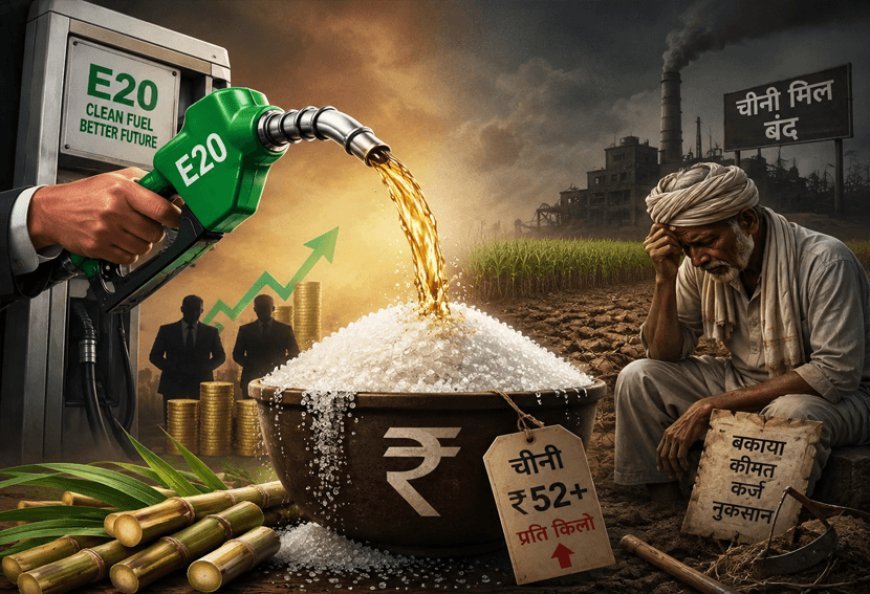
India is the world's largest producer and consumer of sugar. But in August 2026, the sweetness of sugar seems to be turning into bitterness for the common man of the country. In the last few months, the prices have gone up by 40 per cent. On August 18, the average retail price of sugar reached Rs 52.30 / kg, compared to Rs 46.34 / kg a year ago In many cities, the price has gone up to Rs 65 per kg.
The question is not just why did sugar become expensive? The real question is, when sugar prices are rising, why are the pockets of sugarcane farmers empty?
E20: Sweetness in petrol, bitterness in Chinese market?
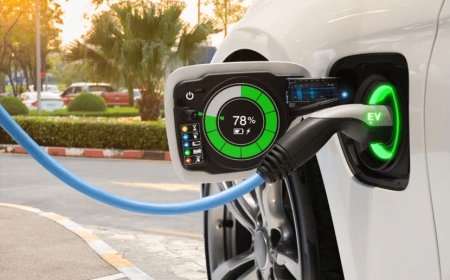
The government's E20 ethanol blending policy aims to blend 20 per cent ethanol in petrol. For this, ethanol production capacity has been increased rapidly in the country. Sugarcane is also an important feedstock of ethanol production.
That's the big question here.
If a large part of sugarcane is going to make ethanol instead of sugar, then the availability of sugar in the market will decrease. Congress leader Jairam Ramesh claimed that about 25 lakh tonnes of sugarcane equivalent to sugar has been diverted to ethanol.
The direct question before the government is - will the price of achieving the target of 20 percent ethanol in petrol be paid by the consumer of the country by buying expensive sugar?
Less rain, less stock and more demand. Trouble of crisis
A weak monsoon worsened the situation. The rainfall deficit at the end of June was more than 40 per cent and the overall monsoon was about 13 per cent below normal This is likely to affect crop yield.
On the other hand, the opening stock of sugar is also under constant pressure. At the beginning of the 2026-27 season, the stock is estimated to be 40-42 lakh tonnes, while some estimates put it at 32-35 lakh tonnes. The country's annual production is about 50 million tonnes.
And the festive season is ahead - Ganesh Chaturthi, Dussehra and Diwali.
That is, the pressure on production, less stock and increasing demand.
In such a situation, it is natural to increase pressure on prices.
Stopped exports, still why didn't sugar become cheaper?
The government has banned sugar exports till September 2026. Limits were also imposed on the stock of dealers. Details of sales were also sought from the mills to prevent black marketing and betting.
However, prices had gone up.
This is the point where the biggest question on the government's policy arises - If there is no relief in the market despite stopping exports and imposing stock limits, is the problem only of hoarding or is there something wrong in the entire policy of production and supply?
Now the government has opened the way for 10 lakh tonnes of imports
On August 20, the government allowed duty-free import of 10 lakh tonnes of raw sugar after nearly a decade. Imports will be duty-free until October 31.
This move can increase supply in the market and reduce some pressure on prices. But it's not a permanent solution.
Because imported sugar will take time to reach the market. The demand is already on the rise during festivals. And after October 31, the same question will come up again - whether there is enough sugar in the country or not?
That is, the government is currently pouring water to extinguish the fire, but how seriously it is working on the causes of the fire is a big question.
The biggest contradiction: Sugar is expensive, farmers are still poor
The most shocking aspect of this entire crisis is the farmer.
Sugar is getting costlier. Businesses are growing. The ethanol economy is expanding.
But farmers?
As on 16.02.2026, cane farmers across the country have an outstanding of about Rs 16,087 crore. Maharashtra has an outstanding of about Rs 4,898 crore, Uttar Pradesh has over Rs 4,000 crore pending payments and Belagavi in Karnataka has over Rs 1,500 crore.
The law gives farmers the right to payment within 14 days of cane supply. Then the question arises...
When the consumer is buying expensive and sugar is selling expensive in the market, why is the farmer not getting his money on time?
This is not just a sugar crisis, it is a balance of policy crisis
The E20 policy aims to reduce dependence on energy imports, boost the ethanol economy and create alternative markets for farmers. This goal is important in itself.
But the success of any policy is determined not only by its goal, but also by its result.
If sugarcane is getting diverted to ethanol, sugar stocks are depleting, consumers are buying expensive sugar and farmers are still agitating for payment, then the government will have to go beyond the data and review the entire system.
The question is not of being against or in favor of E20. The question is how to balance food security, sugar price and farmer payments with E20.
The government now has to answer three questions.
The first - Was domestic sugar demand and festival surplus correctly estimated while fixing the limit for diversion of sugarcane for ethanol?
The second - When the retail price of sugar is increasing, where is the responsibility of the government to ensure that the sugarcane farmer gets his dues on time?
The third... Will the government's solution be limited to import, stock limit and export restrictions every time, or will there be a permanent improvement in the financial structure of the sugar industry and the farmer payment system as well?
The bitterest truth
A strange picture is being seen in the country today.
The price of sugar is increasing, but the income of the farmer is not.
The business of ethanol is increasing, but the dues of sugarcane are not being cleared.
The consumer is buying expensive, but the farmer is agitating for his money.
If this situation continues, it will not just be a sugar price crisis. It will become a question of who is benefiting between farmers, consumers and government policies?
The government has tried to provide immediate relief by deciding to import 10 lakh tonnes duty-free. But the real test will be how she strikes such a balance in the new sugar season of October, in which E20 in petrol also reached, sugar in the market was also enough, the consumer got relief and the sugarcane farmer also got his money on time.
Because the country does not need a policy in which the sweetness of ethanol in petrol increases and the bitterness of sugar in the kitchen.
Now the government has to decide - will the benefit of the policy be reflected in the data or in the pockets of the farmer and the common man?
What's Your Reaction?