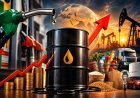





















Crude Oil Crosses $100 Per Barrel... What Started the 'Great Fuel Crisis'? The price of everything from petrol to diesel is at risk.
The Strait of Hormuz is the most important part of this crisis. According to the IMF, about 20 million barrels per day of crude and refined petroleum products pass through this route under normal conditions - that is, about a fifth of the world's consumption. The disruption of this route during the war put the global energy market at serious risk. Now the concern is not just limited to Hormuz. The attack on Saudi Arabia's East-West Pipeline and subsequent disruption of export routes have added to the market's worries. This pipeline is one of the major options bypassing Hormuz. What will happen to your pocket if oil becomes expensive? Fuel is not just fuel sold at the petrol pump. It is an important input to the entire economy.
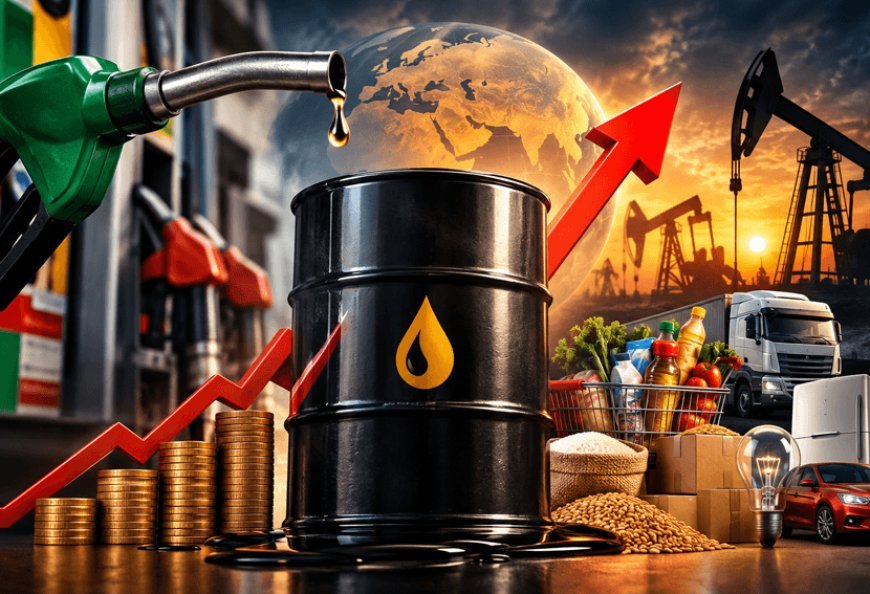
New Delhi, 16 September 2026: The price of crude oil has once again become a major concern for the world economy. Brent crude hit a near four-month high this week and remains above $100 a barrel. On September 15, Brent closed at 08.75, while WTI reached 05.83. After the increase in US crude reserves on Wednesday, there was some softening in prices, but concerns about supply in the market still remain.
It's not just the price of oil. The question is, if this situation continues for long, whose pocket will bear the burden?
What is meant by the 'Great Fuel Crisis'?
It is not an official economic term. To explain the current situation, it can be seen as a potential energy crisis in which global supplies come under pressure due to war, blockage of sea routes and attacks on oil infrastructure.
The Strait of Hormuz is the most important part of this crisis. According to the IMF, about 20 million barrels per day of crude and refined petroleum products pass through this route under normal conditions - that is, about a fifth of the world's consumption. The disruption of this route during the war put the global energy market at serious risk.
Now the concern is not just limited to Hormuz. The attack on Saudi Arabia's East-West Pipeline and subsequent disruption of export routes have added to the market's worries. This pipeline is one of the major options bypassing Hormuz.
What will happen to your pocket if oil becomes expensive?
Fuel is not just fuel sold at the petrol pump. It is an important input to the entire economy.
Crude oil price rises - Petrol and diesel prices rise - Transport cost rises - Freight cost rises - Goods and services prices fall.
And it doesn't just affect cars and bikes. Vegetables, milk, fruits, medicines, online delivery, taxis, buses, construction material - almost everything that has to be transported from one place to another can be affected.
And this is the point where the international oil crisis can directly turn into the monthly budget of the common family.
Why is pressure on diesel more dangerous?
The impact of diesel becoming expensive spreads rapidly in many areas. Trucks, buses, agricultural machinery, construction equipment and freight are directly connected to it.
Diesel prices in Europe are nearing record levels due to supply constraints. Disruptions in Russia's refinery supplies and pressure on exports from the Middle-East have further complicated the situation.
That is, in the coming time, the question will not only be "How much did petrol become expensive? "Rather, it will also be" How much did the expensive diesel make the rest of the goods expensive? "
The IMF's warning: The issue is not limited to petrol alone.
The IMF has assessed different scenarios of the energy crisis. In its adverse scenario, if the shock of energy prices persists, global economic growth could fall to 2.5 percent in 2026 and inflation could reach 5.4 percent. In a more severe scenario, global growth could be around 2% and inflation above 6%.
It simply means: When oil becomes expensive, on the one hand, the purchasing power of families decreases and on the other hand, the cost of business increases.
If this situation persists for a long time, there could be a difficult balance between economic growth and inflation.
Why is India at risk?
India is largely dependent on imported crude oil for its energy needs. Therefore, a sharp rise in international oil prices can have an impact on India's import bill, rupee, inflation and trade deficit.
But an important safeguard for India is the country's emphasis in recent months on alternative supply routes and domestic energy management. The IMF also believes that the impact of the oil crisis is not the same for every country; Economies dependent on energy imports are more vulnerable.
Will petrol, diesel prices increase even more?
Not necessary.
There are several levels between the international crude oil price and the retail price at the Indian pump. Refining cost, taxes, rupee-dollar exchange rate, pricing policy of oil companies and government decisions.
So oil crossing 00 in the international market does not mean that petrol or diesel will become costlier in India in the same proportion the very next day.
But if the crude oil remains at elevated levels for a long time, then it is natural for the pressure to increase.
What's the biggest worry?
The biggest threat is not just today's oil price, but the long-term disruption in supply.
According to the IMF, the initial shock has been somewhat handled by changes in inventories, excess production and demand. But increased use of these safeguards could reduce the scope for dealing with future shocks.
That is, the real question facing the world:
What happens if the oil supply is affected for several months?
The effect of this will not be seen only at the petrol pump. The impact can be seen in kitchen budgets, transport fares, cost of goods, cost of industry and ultimately inflation.
So has the world reached the 'Great Fuel Crisis'?
It is certainly too early to call it the "Great Fuel Crisis." The current situation can more accurately be called the risk of a serious global energy supply crisis.
Because there are some signs of relief in the market. On September 16, the unexpected increase in US oil reserves and the news of Saudi Arabia sending additional oil via Oman eased some of the pressure on prices. But the geopolitical situation in the Middle East and the risks on key supply routes still remain.
That's why the most important question for the common man today is not whether Brent is 08 or 05. And the real question is... If oil stays above 00 for a long time, who's going to foot the next bill for rising costs?
And the answer will not be found only at the petrol pump... He can appear in every receipt of your everyday purchases.
What's Your Reaction?