
































The Rajya Sabha also passed the Birth and Death Registration Amendment Bill, now strict rules on late registration
According to the government, now if a person's birth or death is reported one year after the incident, but within two years, then his registration will not be done by the normal process. In such cases, prior permission of the District Magistrate (DM), Sub-District Magistrate (SDM) or Executive Magistrate authorised by the District Magistrate will be required.
New Delhi | INS
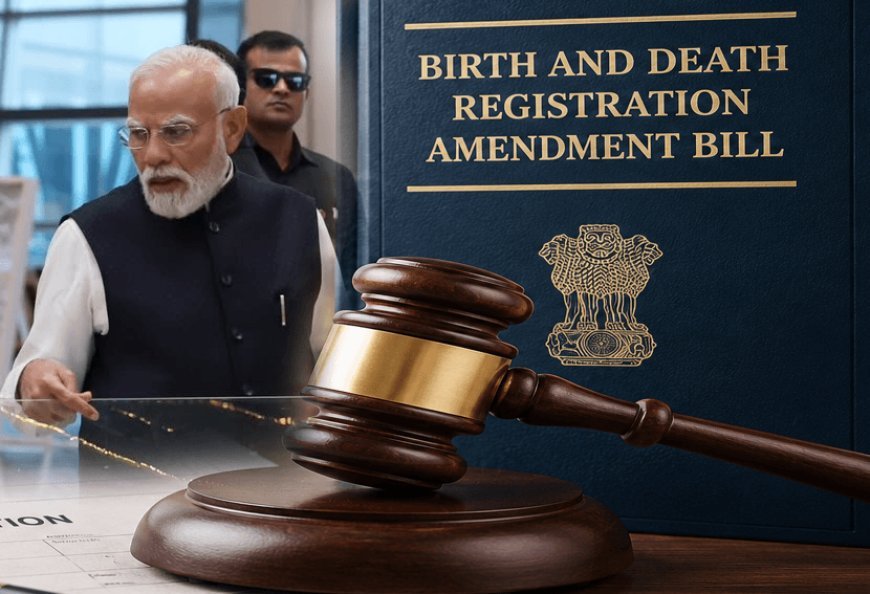
The Central Government has taken an important step towards making the process of registration of births and deaths in the country more transparent, reliable and time-bound. On Tuesday (August 4), the Rajya Sabha also passed the 'Registration of Births and Deaths (Amendment) Bill, 2026' by voice vote. The bill was earlier passed by the Lok Sabha on July 31.
Nityanand Rai introduced the bill when the House reassembled at 2 pm amid uproar by the Opposition. Replying to the discussion, he said the amendment is aimed at making the process of late registration more stringent and authentic by amending Section 13 (3) of the Registration of Births and Deaths Act, 1969.
What will change in the new law?
According to the government, now if a person's birth or death is reported one year after the incident, but within two years, then his registration will not be done by the normal process. In such cases, prior permission of the District Magistrate (DM), Sub-District Magistrate (SDM) or Executive Magistrate authorised by the District Magistrate will be required.
The objective is to ensure that cases of late filing are properly investigated and any kind of bogus entry or documentary irregularity is prevented.
The rules will be more stringent if there is a delay of more than two years
According to the bill, if more than two years have passed since the incident of birth or death, now its registration will be possible only after the order of the Judicial Magistrate of First Class (JMFC).
The Minister of State for Home Affairs clarified that the competent authority will thoroughly examine all the documents and facts submitted before granting permission. Registration will be allowed only after verification.
Timely registration will be encouraged.
The government believes that the amended law will encourage people to register incidents of birth and death on time. At the same time, population records at the national level will be more accurate, reliable and up-to-date, which will increase transparency in government schemes, identity documents and administrative processes.
It has already been approved by the Lok Sabha.
The bill was passed by the Lok Sabha on July 31 amid protests by the Opposition. Opposition parties had demanded that Amit Shah himself be present in the House and respond to it, calling it an important bill. The bill was passed by voice vote with Minister of State for Home Nityanand Rai replying to it after a brief discussion amid the din.
What will be its impact?
Experts believe that this amendment will make birth and death records more reliable. It will curb fake certificates, improve the accuracy of government databases and in future, citizens will benefit from a more transparent and authentic system in matters related to identity, succession, pension, education, health and other government services.
What's Your Reaction?