














The case of 0.4% charge on UPI payments above ₹2,000 has reached the Supreme Court, how will it affect the customers?
What will change for the customer? If you pay ₹3,000 to a shop or merchant through UPI, then only ₹3,000 will go from your account under the fixed arrangement. On this transaction, 0.4% i.e. ₹12 MDR will be charged on the merchant side. MDR on payment of ₹50,000 will be ₹200. The maximum limit of normal MDR for transactions of ₹75,000 and above has been kept at ₹300 per transaction. The important thing: The government has said that MDR is not a government tax and banks have been advised not to pass on the cost to customers.
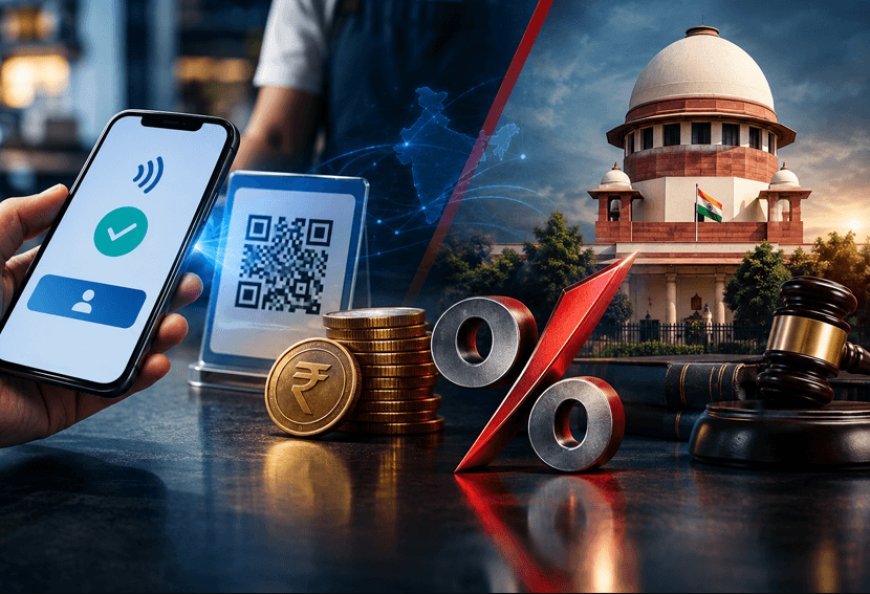
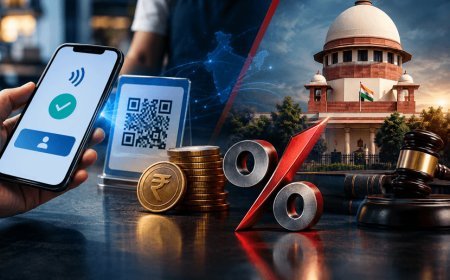
New Delhi, 16 September 2026: The decision to impose a 0.4 per cent Merchant Discount Rate (MDR) on UPI merchant payments above ₹2,000 has been challenged in the Supreme Court. A petitioner named Anjan Dutta has questioned this system by filing a public interest litigation. The plea claimed that due process of law was not followed as it was a matter of fundamental right to equality and trade.
The petitioner argues that the new charges could put additional financial pressure, especially on small and low-margin traders. This is also expected to have an indirect impact on customers, as traders may add additional costs to prices or prefer cash options for larger payments.
However, according to the existing rule, MDR is not to be taken directly from the customer. From October 15, 2026, select Person-to-Merchant (P2M) UPI transactions above ₹2,000 will attract 0.4 per cent MDR on the merchant side. P2M payments and Person-to-Person (P2P) UPI transactions up to ₹2,000 will be excluded from this MDR.
What will change for the customer?
If you pay ₹3,000 to a shop or merchant through UPI, then only ₹3,000 will go from your account under the fixed arrangement. On this transaction, 0.4% i.e. ₹12 MDR will be charged on the merchant side. MDR on payment of ₹50,000 will be ₹200. The maximum limit of normal MDR for transactions of ₹75,000 and above has been kept at ₹300 per transaction.
The important thing: The government has said that MDR is not a government tax and banks have been advised not to pass on the cost to customers.
What payments will be waived?
P2M UPI payments up to ₹2,000: MDR is not a person-to-person payment: Some of the transactions of MDR not Small Eligible Traders: Some of the essential sectors like Railways, Telecom, Insurance, Fuel exempted from MDR: ₹5 Flat MDR Mutual Fund, Securities and Payments linked to Stockbroker: 0.02% MDR, up to a maximum of ₹300
According to the government, about 96% of merchant UPI transactions will not be affected by this change.
Now, after the petition filed in the Supreme Court, the real question is what is the legal validity of this new MDR regime applicable to digital payments above ₹2,000 and who will bear the actual financial burden? Arguments that come up in the hearing of the case can decide the future direction of this system.
What's Your Reaction?